Social determinants of health
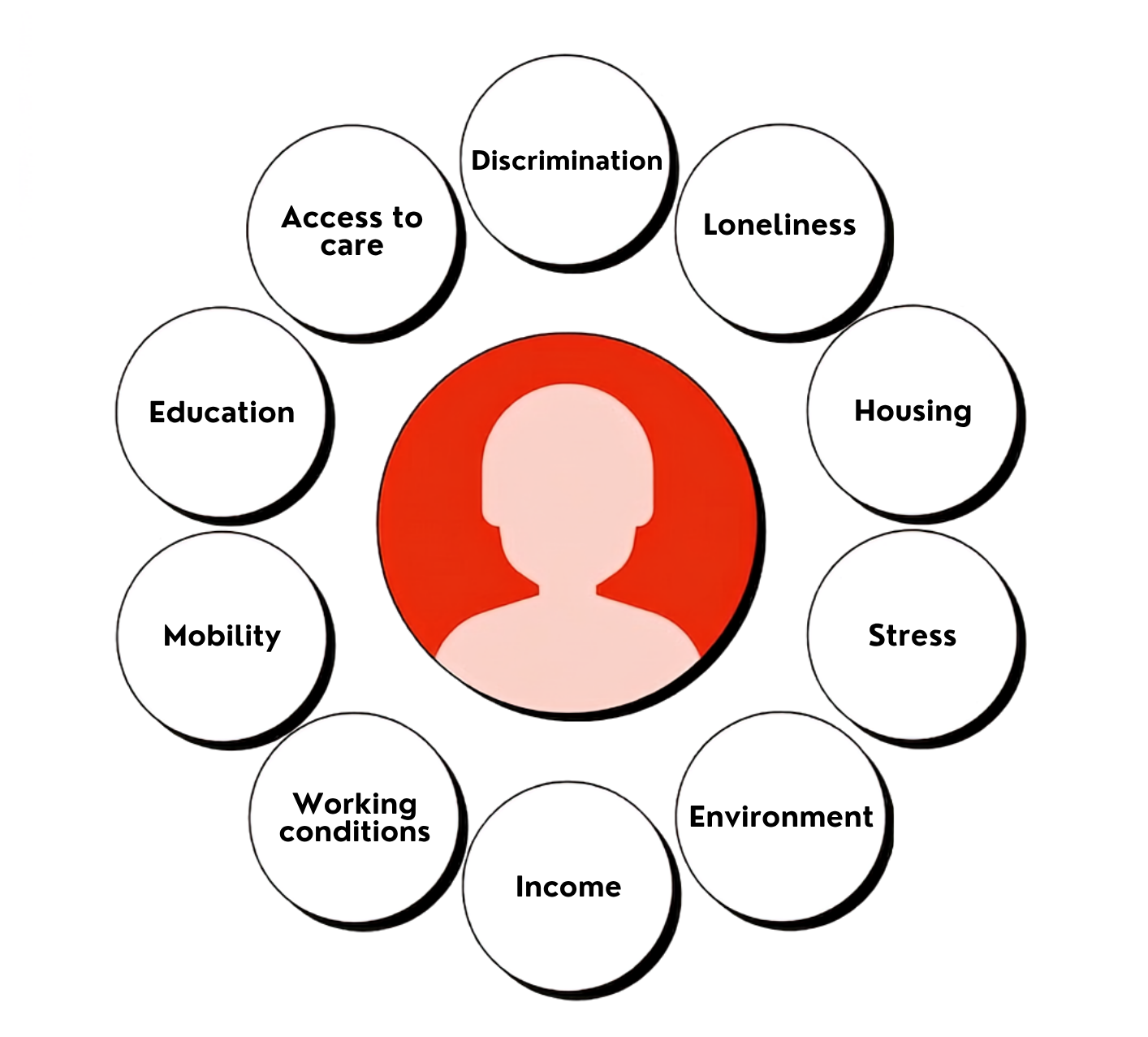
Whether people are healthy or ill depends on the social conditions in which they live. Such "social determinants" can be, for example, discrimination, wealth and income, housing conditions, working conditions or environmental factors. It is therefore not sensible for our healthcare system to be strongly focussed on the individual's own responsibility. We want more attention to be paid to the social causes of health and illness (social determinants).
Discrimination
People who regularly experience discrimination have a higher risk of mental and physical illness. Discrimination can cause fear, anger, frustration and therefore chronic stress, which weakens the immune system and increases the risk of illnesses such as high blood pressure, heart disease and depression. In addition to education and representation, social cohesion and a general culture that does not accept or tolerate discrimination of any kind and takes a clear stand against it is needed.
Loneliness
Loneliness has a considerable impact on both mental and physical health. The risk of depression, cardiovascular disease or early death increases. Effective measures against loneliness (neighbourhood programmes / club involvement / meeting places) start with structural changes that enable participation and prevent loneliness. Looking at our own environment and caring for friends, family, neighbours and people we don't know personally also helps to combat loneliness in everyday life.
Living
Too little space, noise, insecure tenancies and high rents cause stress and strain. A good home that is affordable and safe is very important for health. There is a need to promote affordable housing and for urban planning to facilitate recreation, socialising and mobility. This promotes social interaction and quality of life.
Stress
Chronic stress weakens the immune system and increases the risk of illnesses such as high blood pressure, heart disease and depression. Stress is a natural reaction of the body to demands, but it can make you ill if it persists. It is unevenly distributed socially, as people with more income often have more control and security in their lives. Social cohesion and a fairer distribution of resources (such as money, living space, time, etc.) are important protective factors against chronic stress
Environment
Not only pollutants in food or everyday objects, but also particulate matter, noise and UV radiation can cause chronic diseases such as asthma, high blood pressure or cancer. Environmental pollution affects poor people more frequently, putting their health at greater risk. In addition to the natural environment, the built environment - such as cities, roads, transport and infrastructure - also influences well-being, exercise, social cohesion and accessibility in everyday life. Power and economic interests shape the design of cities and lead to spatial inequality, which is clearly reflected in major health disparities between neighbourhoods. Urban planning is therefore needed that prioritises recreational spaces in urban districts and protects residents from harmful environmental influences in the best possible way.
Income
Income is a decisive factor for health. People with low incomes and assets feel more restricted in terms of their health. Statistically, they are more often chronically ill and die earlier. A higher income improves financial security and reduces stress that is harmful to health. Trade unions strengthen employee co-determination and contribute to better health through better working conditions. However, a well-developed welfare state is essential for easier access to social benefits that focuses on counselling instead of sanctions. This protects against poverty and social exclusion and thus has a stabilising effect on physical and mental health
Working conditions
Poor working conditions, such as high time pressure, insecure contracts or a lack of co-determination, lead to higher stress levels, more sick days and poorer health in the long term. Good (trade union) organisation of work, breaks and a good working atmosphere with a benevolent and mutually supportive team help to create the best possible working conditions.
Mobility
Good public transport connections save time and make everyday life easier.
Mobility determines how well people can participate in social, cultural and professional life.
Poor transport connections, expensive public transport or a lack of cycle paths or footpaths contribute to social isolation, especially among older people and socially disadvantaged groups.
As mobility is unequally distributed, free and well-developed public transport can reduce health inequalities and promote health.
Education
A good school-leaving qualification or further training helps to get better jobs. Education also helps people to know more about health and prevent illness. Good educational opportunities and easy access to learning strengthen the ability to make self-determined and healthy decisions. Low-threshold, free educational programmes are needed for all people - including on the subject of health, prevention and disease prevention.
Access to care
Access to medical care depends heavily on the structure of the healthcare system. People in disadvantaged regions often experience barriers such as long waiting times or unclear responsibilities. Only through systemic reforms, better regional planning and multi-professional cooperation can equitable and prevention-orientated care be achieved. Multilingual, low-threshold services close to home are needed, as well as close support from different health and social professions.
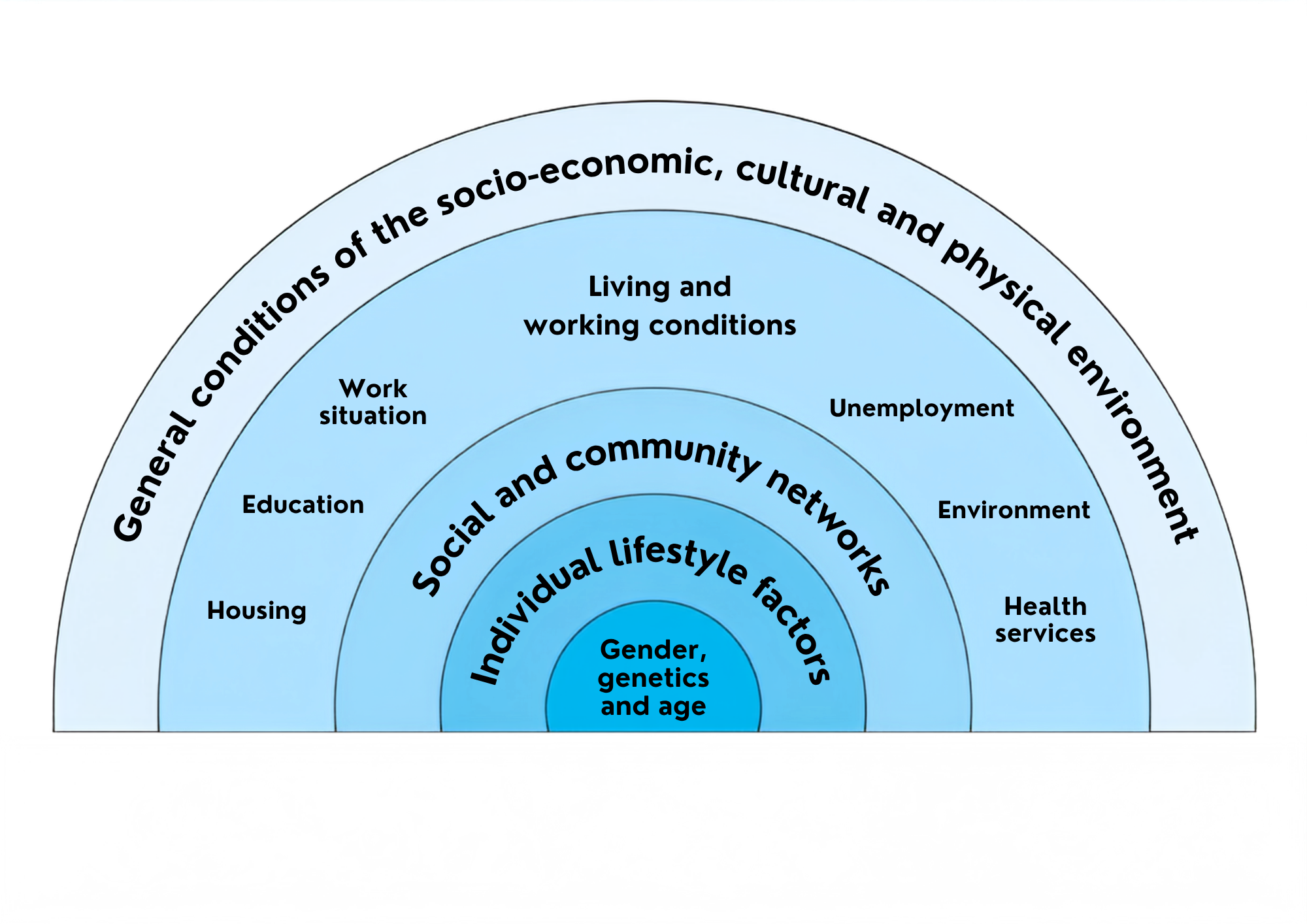
Alternative text: Semi-circular graphic. In the centre is "Gender, genetics and age". This is followed by layers labelled "personal lifestyle factors", "social and community networks" and "living and working conditions" with the terms "work situation", "education", "housing", "unemployment", "environment" and "healthcare". The outermost layer is called "general conditions of the socio-economic, cultural and physical environment". The colours of the layers change from darker blue in the middle to very light blue on the outside.
What our centres write about social determinants of health:
And here more information: